

Choosing the right installation method for underground services can make or break a project in Sydney’s tightly managed urban and suburban environments. Whether the goal is to run new water mains under a busy road or connect power across a landscaped site, project managers must balance cost with the impact on the surrounding area. This is where experienced directional drilling specialists in Sydney become essential. Daley Directional Drilling often sees clients weighing up horizontal directional drilling against traditional open trenching, yet the practical differences between the two are not always clear at the outset.
This guide prepared by Daley Directional Drilling provides a clear comparison between directional drilling and trenching to help property owners understand how each method affects budgets, project duration and disruption to traffic, businesses and residents. The discussion sets out the key technical differences between the two approaches, then compares cost and time across real project scenarios common throughout NSW. It also explains when directional drilling is usually the smarter solution and when conventional trenching remains the better option. After reading this guide, property owners will be better equipped to select the method that best suits their site conditions and long-term asset performance.
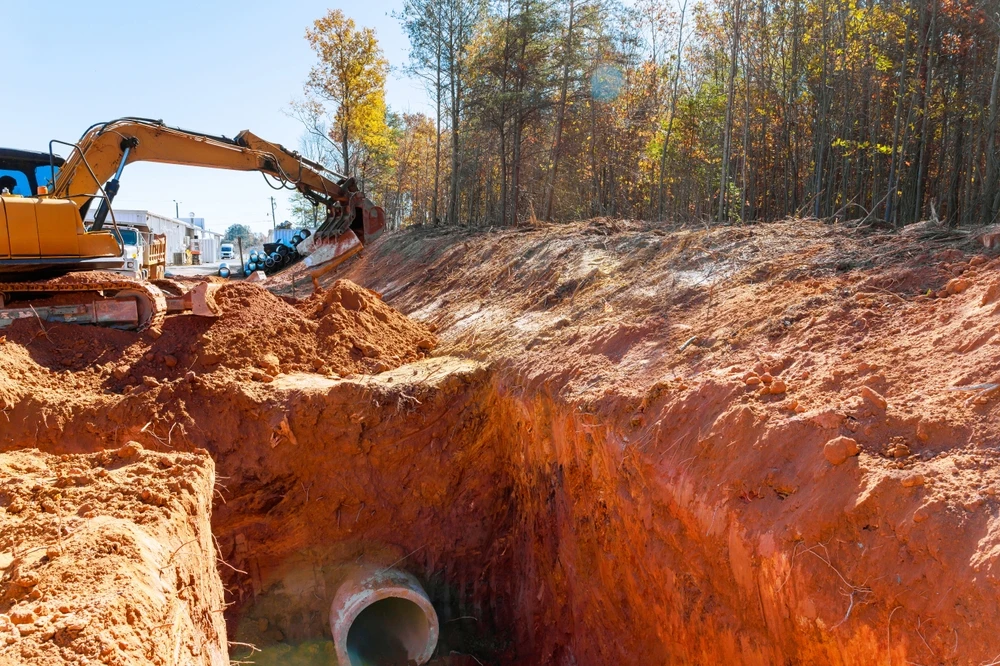
Homeowners and utility planners comparing directional drilling and trenching mainly want to know how each method affects cost and risk. Both install underground services, but they do it in very different ways that suit different situations across NSW.
Directional drilling creates a guided bore underground with minimal surface disturbance, while trenching opens the ground from the surface to lay services directly. Understanding how they differ in access and accuracy, or safety and site impact helps determine which approach is more suitable for a particular project.
Trenching requires a continuous open cut along the entire alignment. This can be straightforward on undeveloped land, but on finished sites it often means removing driveways or paved areas and then reinstating them. On busy streets trenching can require lane closures and extended traffic control.
Directional drilling only needs a launch and a receive pit, usually located at the edges of the work area. The drill passes underneath driveways and structures without disturbing them at the surface. This is particularly valuable in built-up suburbs where space is tight and reinstatement costs are high.
Where access is very narrow (such as between existing buildings or along tight side setbacks), directional drilling can often complete an installation that would be very difficult or impossible to trench safely.
Trenching installs services in an open excavation where the crew can see the pipe or conduit as it is placed and backfilled. The depth is controlled by the excavator operator but can vary if the ground is uneven or contains rock. It is generally most suitable for short or simple runs.
Directional drilling uses a steerable drill head guided by a locating system to follow a precise bore path underground. This allows the operator to:
For gravity services like drainage, careful grade control is essential. For pressure services such as water or communications cables, consistency and separation from other services are key. Expert workers use modern locating equipment so the final pipe position can be recorded far more accurately than with many traditional trench installations.
Open trenches present fall and collapse risks and require shoring or battering to meet safety requirements. They also remain open for longer periods, which increases exposure for workers and the public. In high-traffic or pedestrian areas this can significantly increase project complexity.
Directional drilling minimises open excavations to the entry and exit pits, which reduces fall hazards and site exposure. It also lowers the risk of damaging existing services because the drill head is continuously located, and its depth and alignment are carefully managed. This is a strong advantage in older suburbs where service records may be incomplete.
From an environmental perspective, trenching disturbs a large volume of soil and can impact tree roots and stormwater flows. Directional drilling is more targeted, so it better protects mature trees and sensitive habitats which can be important for private properties and council-managed land.
Anyone comparing directional drilling with open trenching usually wants to know which option will cost less overall or how long the work will take and how disruptive it will be to homes and businesses. The answer often depends on the site and the type of service being installed, but some clear patterns apply depending on the location.
Professionals generally find that while directional drilling can look more expensive per metre on paper, it often works out cheaper overall once lost business or access are taken into account. It is also typically faster on complex or sensitive sites and causes far less mess and interruption to daily life.
On a clear paddock, trenching is often cheaper per metre because the machinery is basic and the work is straightforward. However, this picture changes quickly in urban or built-up areas. Trenching requires excavation along the full length of the alignment plus spoil removal and disposal before the reinstatement of roads or landscaping.
Directional drilling usually involves higher upfront equipment and setup costs, but the footprint on the surface is much smaller. There are typically only entry and exit pits and sometimes a small receiving pit at connection points. This significantly reduces costs for:
For many projects, the savings on reinstatement and traffic management mean directional drilling is more cost-effective overall even if the drilling rate per metre is higher than trenching.
Trenching speed depends on depth and what is in the way. In open ground a trench can be excavated quickly, but in built environments progress slows due to existing tree roots and traffic staging. Each section must be dug before the service can be installed, and then the trench backfilled and compacted before the surface can be restored.
Directional drilling often completes the same run in less total time, particularly for longer distances or where the route crosses roads and driveways. Once the drill path is planned, the crew can set up and complete a pull in a relatively continuous operation without stopping to open and close long trenches. Weather delays are often reduced as well because there is less exposed open excavation.
For clients this can mean fewer days of disruption on site and faster connection of new services while spending less time coordinating with other trades or council requirements.
Trenching is inherently more disruptive because it opens up the ground along the whole route. This can mean lane closures and compaction, or dust and mud depending on the weather. Businesses may lose parking or access, and residents can face blocked driveways and long detours.
Directional drilling significantly reduces this impact. With only small pits and a compact drill rig required, it is usually possible to keep traffic moving with minor lane shifts while maintaining pedestrian access and keeping driveways mostly clear. Noise and vibration are also generally lower and confined to smaller areas.
In suburbs and along busy roads, this reduced disruption is often a key factor in choosing directional drilling. This is especially true where councils are strict about road openings or where critical access for shops or schools or emergency services must be maintained.
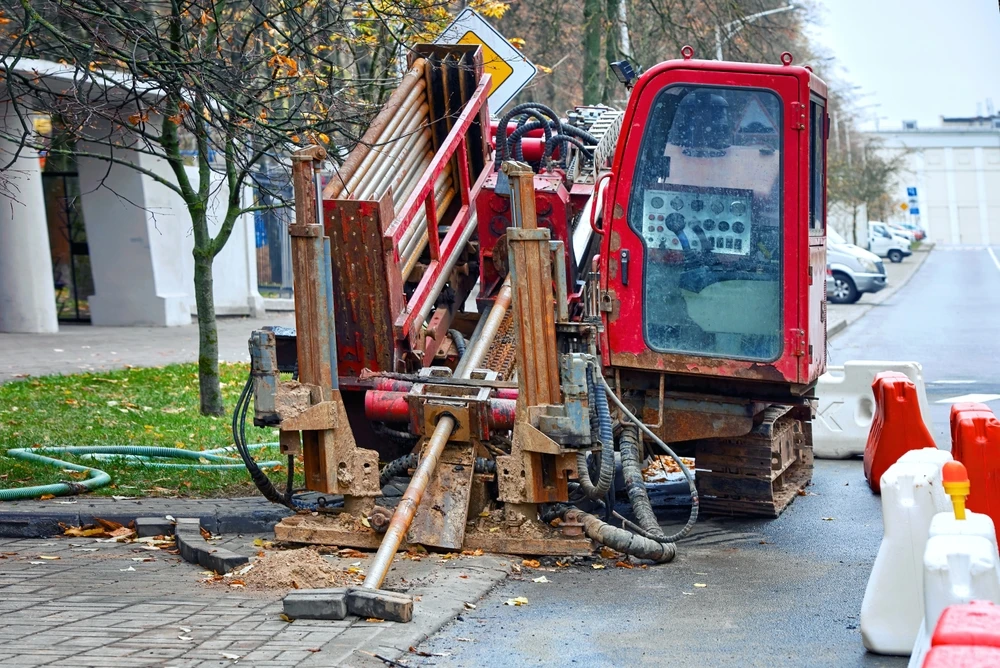
Directional drilling is usually the better choice when there is a need to install services with minimal disturbance at the surface. It is particularly useful on busy streets and established properties where open excavation would be expensive or unsafe.
Rather than cutting a trench along the entire route, professionals can steer a bore underground and pull services through so most of the work is contained below ground. This approach often saves time while reducing reinstatement costs and lowering the risk of damaging existing infrastructure.
In urban environments with finished surfaces, directional drilling is often preferred because it keeps the surface largely intact. This is ideal where the route crosses:
Instead of saw cutting and excavating long trenches and then paying to reinstate asphalt or concrete, the crew drills from small launch and exit pits. For councils and asset owners, this often results in faster approvals because there is less impact on pedestrians and public spaces.
Directional drilling is also well suited to commercial sites where business access and parking must remain available. With fewer open excavations there is less need for barriers and detours, which helps reduce disruption to customers and staff.
Whenever a new service must pass under an obstacle, directional drilling has a clear advantage over trenching. Common examples include:
Trenching across these features can require traffic shutdowns or rail possessions. By drilling underneath, experts can often avoid these complications and work within tighter time windows.
Directional drilling also allows the bore path to be steered around congested utility corridors. With modern locating equipment the operator can track depth and alignment in real time, which helps reduce the chance of striking existing services. This is particularly valuable in older suburbs where underground records may be incomplete or inaccurate.
For installations that must follow a specific grade or maintain a particular depth, directional drilling provides much greater control than traditional trenching. This is especially important for:
The drill head can be adjusted to follow the designed profile while the locator confirms alignment. This accuracy is difficult to achieve with deep or uneven trenches, particularly in unstable ground.
Directional drilling is also usually the better option for longer runs where trenching would be slow and labour intensive. A single shot can often replace hundreds of metres of open excavation, which reduces spoil handling and truck movements. In areas with limited access (such as behind existing buildings or under established trees), drilling can reach locations that would be impractical to excavate by traditional means.
Trenching still has a clear place alongside directional drilling for many underground service installations. In some situations it is simpler and more economical to open a trench and install the asset in an open cut rather than drill a bore.
For most projects, experts often recommend trenching where services are shallow and easily accessible and the surface can be disturbed and reinstated without major disruption or cost.
Trenching is usually the better option for short, uncomplicated runs where there are no major obstacles. If the service only needs to be installed at a shallow depth in an open area, excavation can be done quickly with a small excavator before the line is laid and backfilled on the same day.
Typical examples include:
In these cases the setup time and tooling cost for directional drilling can outweigh the benefits. Trenching also allows the crew to visually confirm depth and separation from any existing services, which can be reassuring on simple domestic works.
Where access is wide open and surface finishes are basic or already being replaced, trenching is often more cost-effective. If the ground is grassed or bare soil and there are no significant structures in the way, the impact of opening a trench is minimal.
Trenching is often preferable when:
In many subdivisions, new lots are cut and filled before being serviced for final landscaping. On these projects an open trench allows multiple utilities to be installed in one operation, which reduces overall construction time and simplifies coordination.
For some assets the ability to see and access the service line easily is more important than minimising surface disturbance. Trenching is well suited where frequent tie-ins are required or where future maintenance is expected.
Examples include:
With an open trench, the crew can check levels and bedding around pipes or conduits in real time. This is particularly useful for gravity systems where a slight deviation in grade can affect performance. Trenching also allows installation of inspection points or pits exactly where they are needed without complex drilling setups.
On balance, surface reinstatement is straightforward if the route is short. Future access is important, as professional installers will often advise that traditional trenching is the more practical choice.
In the end, the choice between directional drilling and trenching isn’t about which method is “best” in isolation, but which is best for your specific project and long-term goals. Directional drilling typically comes into its own when you need to minimise surface disruption while protect existing infrastructure or working in built-up or environmentally sensitive areas. It often delivers better value when you factor in reduced reinstatement costs and fewer community or business interruptions, even if the upfront price per metre is sometimes higher.
Trenching still has a clear place for straightforward rural or greenfield sites where access is easy and reinstatement is simple and inexpensive. It can be faster and more economical in these conditions, especially for shorter runs or when precise grade control for gravity services is required. By weighing the key differences in cost and disruption (along with site constraints and long-term maintenance), you can select the method that truly supports the success of your project. The most effective approach is often to consider both options side by side at the planning stage, then choose the solution that delivers the safest and most cost-effective outcome over the full lifecycle of your underground services.


