

Drilling fluid is vital in every horizontal directional drilling project. The right fluid helps maintain bore stability, remove cuttings, reduce friction and keep drilling equipment operating efficiently. Poor fluid selection can contribute to issues such as stuck pipe, lost circulation, frac-outs and costly delays.
For horizontal directional drilling in Sydney, drilling fluids need to suit the ground conditions and requirements of each bore. Water, bentonite, polymers and other additives can be selected and adjusted to support hole cleaning, lubrication, stability and overall drilling performance.
Daley Directional Drilling uses HDD techniques to complete underground installations with minimal disruption to surrounding surfaces and infrastructure. Understanding how drilling fluids are selected, managed and adjusted helps explain their role in maintaining efficient drilling, managing risks and achieving reliable project outcomes.
Drilling fluid is essential to an HDD project, helping create suitable conditions for drilling, reaming and product installation. Its main functions include supporting the bore, carrying drilled material to the surface, cooling and lubricating tooling and reducing resistance during pullback.
Drilling fluid helps support the walls of the borehole by forming a thin filter cake over the surrounding formation. This is important in loose or unconsolidated ground, such as sand and gravel, where the bore may be more prone to collapse or erosion.
The fluid also provides hydrostatic pressure within the bore. When properly controlled, this helps maintain stable downhole conditions without placing excessive pressure on the surrounding formation. Maintaining this balance can reduce the risk of bore instability and inadvertent fluid returns.
As drilling fluid circulates through the bore, it helps remove heat from the drill bit and downhole equipment while reducing friction between the tooling and bore wall. It also suspends soil and rock cuttings and carries them back to the entry point for removal.
Effective circulation helps prevent cuttings from accumulating around the drill string, where they can restrict movement, increase torque and contribute to equipment problems.
During reaming and pullback, drilling fluid creates a lubricated pathway around the product pipe. This helps reduce friction and tensile loads as the pipe is installed through the completed bore.
Proper fluid management also helps control fluid loss and reduce the risk of surface disturbance, washout or inadvertent returns. Fluid selection and monitoring are therefore important parts of overall HDD planning.
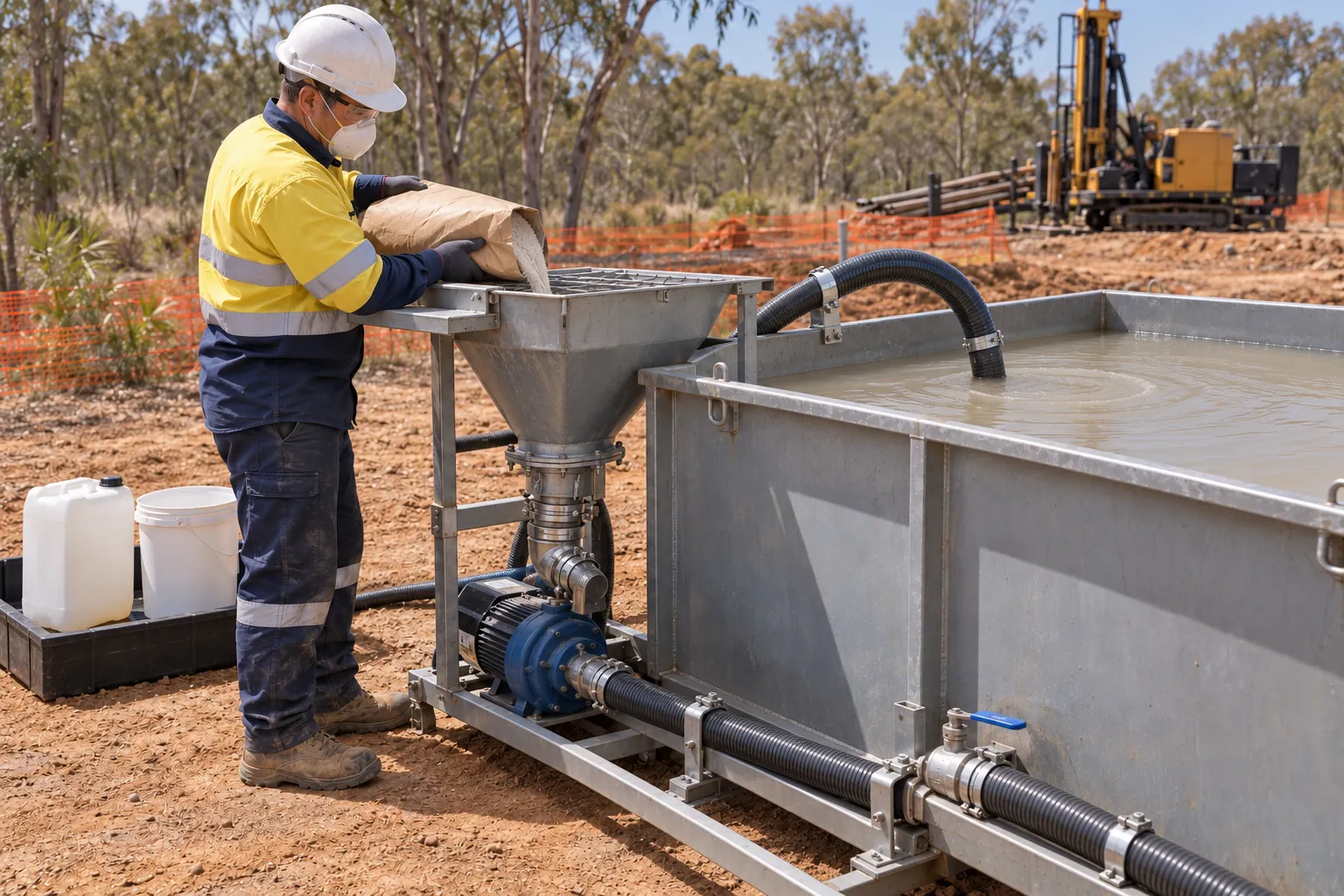
HDD drilling fluids are selected according to factors such as ground conditions, bore size, drilling method and project requirements. Most systems combine water with bentonite and, where needed, specialised additives to improve cuttings transport, bore stability, lubrication and fluid loss control.
Water is commonly used as the base fluid, but it provides limited bore support and cuttings-carrying capacity on its own. Bentonite is therefore widely added to HDD fluid systems. When mixed with water, sodium bentonite swells and forms a gel that helps suspend cuttings, support the bore walls and reduce fluid loss into the surrounding ground.
Polymer systems may also be used where additional performance is required. PHPA can help control reactive clays and shales by reducing the dispersion and swelling of cuttings, while viscosifying polymers can improve cuttings transport in sandy ground. Concentrations are adjusted according to the formation and requirements of the bore.
Additional additives can be used to fine-tune the drilling fluid system. Filtration control agents help reduce fluid loss in permeable formations, while bridging materials can help manage larger voids in gravel or fractured ground. Lubricating additives may also be included to reduce friction and torque during longer bores and pullback.
Water conditioning products such as soda ash can improve bentonite hydration where water hardness affects fluid performance. Other additives may be selected to control bacterial growth or meet environmental requirements. Properties such as viscosity, density and sand content can be monitored throughout drilling so the fluid system remains suitable as conditions change.
Drilling fluids influence drilling efficiency from the pilot bore through to reaming and pullback. Beyond simply carrying cuttings, a well-managed fluid system helps control equipment loads, maintain circulation and keep drilling conditions consistent.
Here are some performance benefits:
Effective fluid management supports smoother drilling and reduces the likelihood of performance problems as the bore progresses.
Bentonite is a key component of many HDD drilling fluid systems because it helps transport cuttings, stabilise the bore and control fluid loss. When sodium bentonite is mixed with water, it swells and forms a thixotropic slurry that flows during circulation while developing gel strength when pumping stops.
Bentonite supports HDD performance in several ways:
The required concentration varies according to the bore size, formation and drilling conditions, with larger or more complex projects generally requiring closer control of fluid properties.
Bore stability depends on maintaining suitable pressure, limiting fluid loss and removing drilled material effectively. Drilling fluids help achieve this by supporting the exposed formation and creating controlled conditions around the bore.
As drilling fluid circulates through the bore, fine particles can form a thin filter cake against the bore wall. This layer helps reduce fluid loss into the surrounding formation while providing additional support to exposed ground.
Bentonite-based fluids are particularly useful because bentonite swells in water and can form a stable coating along the bore wall.
Drilling fluid provides hydrostatic pressure within the borehole. When properly balanced, this helps counteract formation pressures and support the surrounding ground. Insufficient pressure can contribute to instability, while excessive pressure can increase the risk of fluid escaping into weak formations or returning to the surface.
Bore stability also relies on effective removal of drilled material. Suitable viscosity and gel strength help keep cuttings suspended and transport them back to the entry pit instead of allowing them to accumulate around the drill string.
Monitoring these properties allows the fluid system to be adjusted as solids loading and ground conditions change.
Drilling fluids create a lubricating layer between the drill string, bore wall and product pipe. This reduces resistance as tooling moves through the formation and helps manage torque during drilling and pullback forces during product installation.
The effect becomes important on long, curved or large-diameter bores where friction can increase equipment loads and pipe stress.
Bentonite-based fluids form a thin film along the bore wall, reducing direct contact between the tooling, product pipe and surrounding soil. This creates a more consistent pathway during reaming and pullback.
Lower friction means less torque is required to rotate drilling equipment and less force is needed to pull the product pipe through the bore. This can help reduce loads on the drill rig, tooling and product pipe on longer or curved installations.
Fluid circulation remains necessary during reaming and pullback because it keeps the bore lubricated while carrying away additional cuttings. Compatible lubricating additives can also be introduced where required without compromising the overall fluid system.
Drilling fluid selection for HDD depends heavily on the ground conditions along the bore path. Bentonite, polymers and other additives can be adjusted to address specific challenges such as reactive clay, fluid loss, heavy cuttings or unstable ground.
Common approaches are the following:
Projects in coastal or low-lying areas may also require specific assessment and management where acid sulfate soils could be disturbed.
Fluid properties such as viscosity, gel strength, density and return flow can be monitored throughout drilling so the system can be adjusted when the formation or solids loading changes.
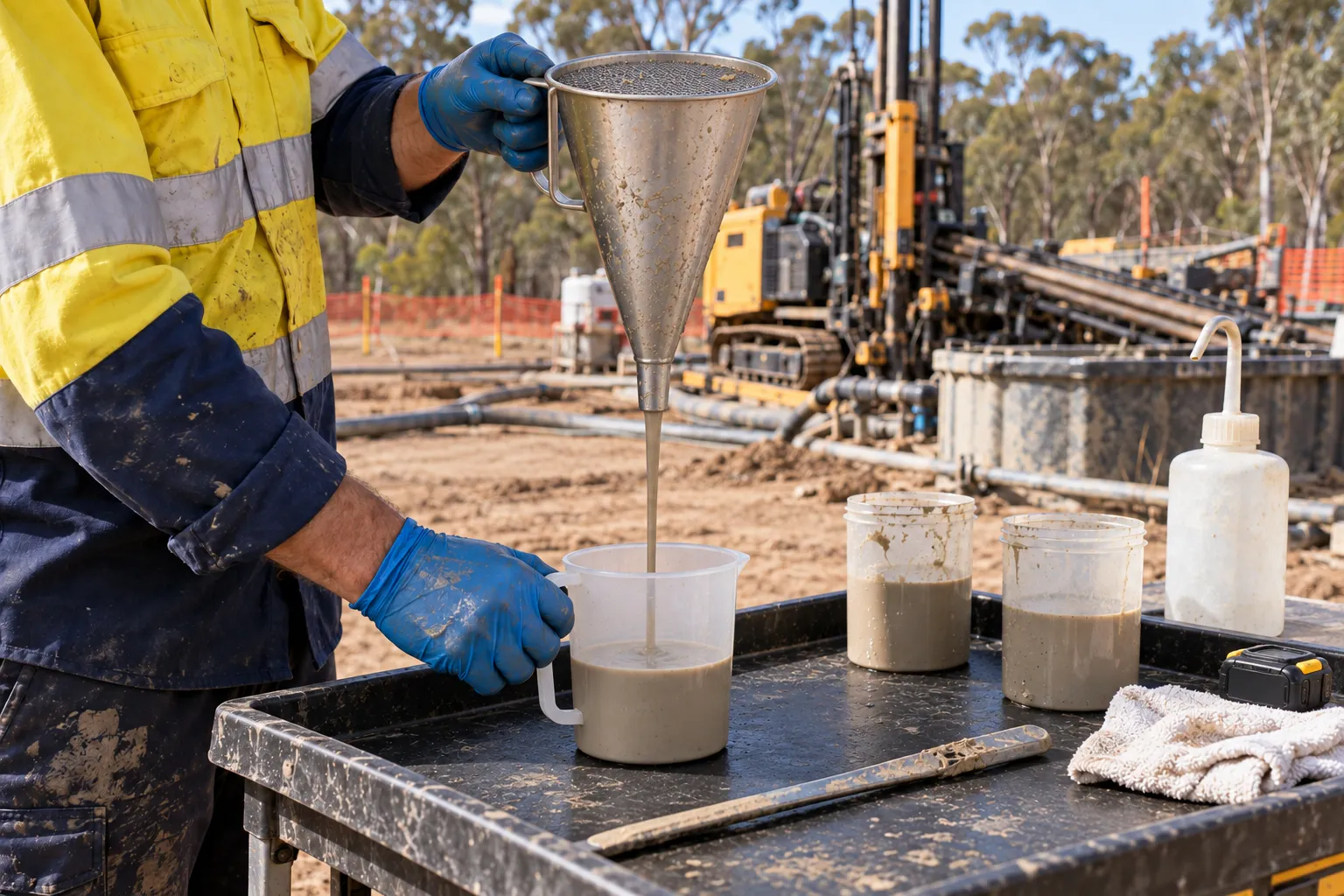
Drilling fluid performance depends on more than the products used. Water quality, ground conditions, fluid properties, solids loading and circulation all affect how effectively the system supports bore stability, cuttings removal and equipment performance.
Key factors include:
Keeping these factors under control helps maintain effective fluid performance from the pilot bore through reaming and final pullback.
Even a well-planned HDD fluid system can develop problems as ground conditions and drilling requirements change. Issues such as excessive solids, incorrect viscosity, fluid loss and poor mixing can affect cuttings transport, bore stability, circulation and equipment performance.
Effective monitoring and mud management can help crews respond to common HDD challenges before they cause significant delays or equipment problems.
Common drilling fluid problems are:
Regular monitoring helps identify these issues early and allows adjustments to be based on actual bore conditions rather than simply adding more products. This supports consistent cuttings transport, bore stability and lubrication while reducing drilling delays and equipment problems.
Drilling fluid management during HDD involves maintaining fluid performance, controlling volumes and handling waste responsibly. Fluids are monitored and recycled where practical during drilling, while remaining mud and cuttings are collected and managed according to site requirements and applicable regulations.
Important aspects of fluid management:
Effective fluid management helps maintain drilling performance while reducing waste, controlling site impacts and supporting responsible completion of the project.
Drilling fluids play a role in successful horizontal directional drilling, helping maintain bore stability, transport cuttings, reduce friction and control downhole pressure. Selecting and managing the right combination of water, bentonite, polymers and additives for the ground conditions can reduce drilling problems, delays and environmental risks while supporting efficient installation.
Daley Directional Drilling recognises the importance of effective fluid management throughout each HDD project. Regular monitoring, appropriate adjustments and responsible fluid handling help maintain controlled drilling conditions, resulting in smoother operations, reliable installations and better project outcomes.


