

A successful directional drilling project in Sydney relies on accurate planning long before equipment arrives on site. Whether the work involves utility crossings, infrastructure upgrades or complex installations, the quality of the information provided during the quoting stage directly affects the overall project. For organisations considering the service, supplying complete and accurate project details allows Daley Directional Drilling to assess feasibility, identify potential challenges and develop a practical installation strategy.
This article outlines the key information a contractor requires before preparing a quote and explains why each detail matters. Understanding these requirements helps establish realistic budgets, minimise uncertainty and create the conditions for a safe and efficient drilling operation.
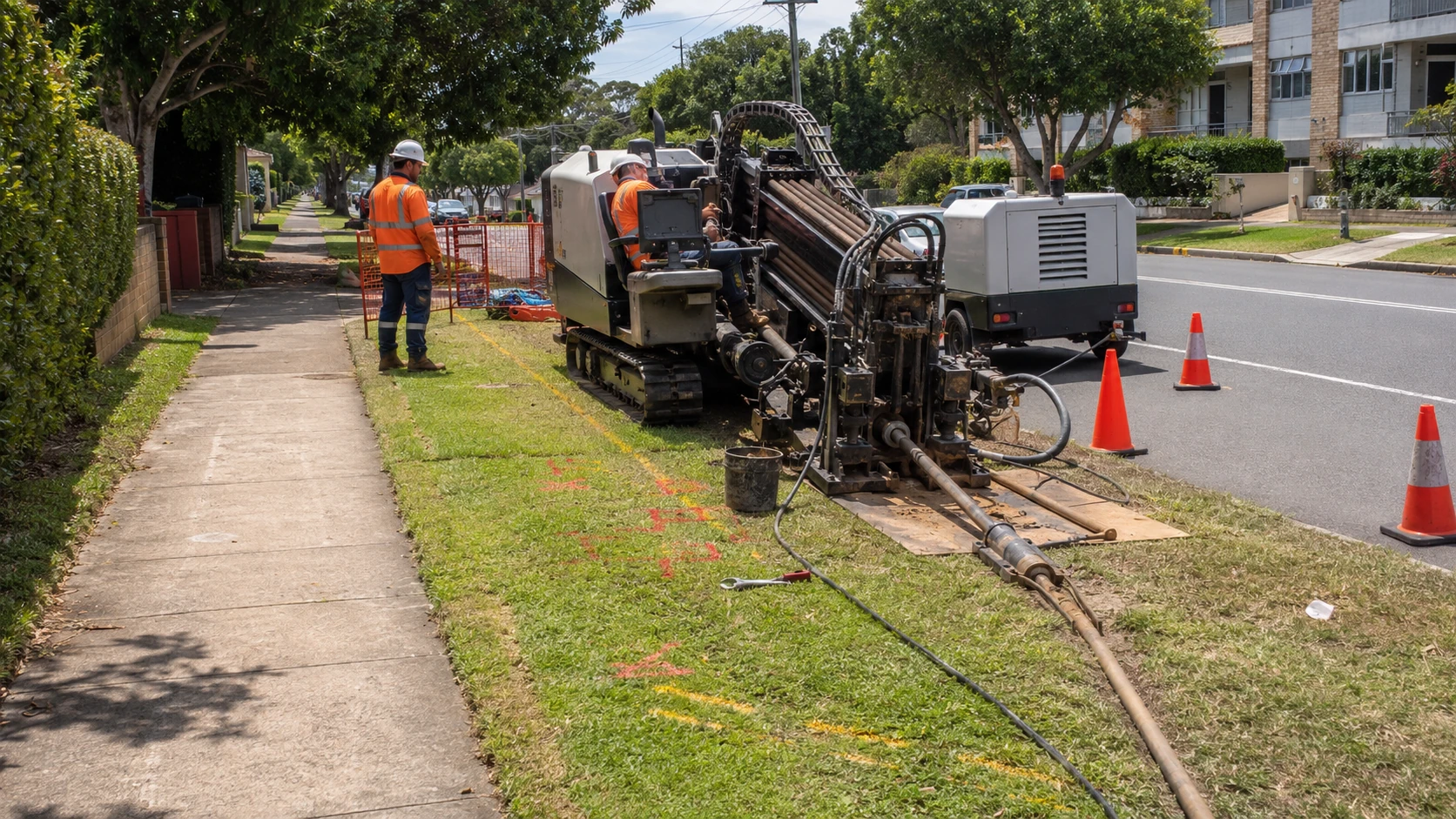
The type of underground service to be installed is one of the first details a directional drilling contractor needs before pricing a project accurately. Different utilities have different design standards, regulatory requirements, risks and construction methods, all of which affect the drilling approach, material selection and cost.
Clear information about the utility type, size and function helps determine bore depth, separation from other services, required casing or conduits and the equipment and crew needed. Without this information, any quote is likely to be only a broad estimate.
Pressure pipelines, such as potable water, gas and sewer or stormwater rising mains, require careful planning because they operate under pressure and often have specific safety, testing and approval requirements.
The contractor will typically need to know:
Gas and fuel lines may require specific separation distances, approved pipe materials, marker systems and testing requirements, depending on the asset owner, design standard and approval conditions. Water and pressure sewer lines may involve specific pipe material, jointing, pullback load, pressure testing, bend radius and tie-in requirements.
Entry and exit angles also need to be planned so the pipe can be installed without overstressing the product or connection points. These details affect the bore design, equipment selection and the level of quality assurance needed before the line can be commissioned.
Gravity services depend on consistent grade, so installation tolerances are tighter. Although directional drilling is a trenchless method, maintaining a controlled slope is still possible over shorter distances with careful planning.
For gravity lines, the contractor will need:
Even small variations in level can affect performance. The bore path may need to be adjusted to meet grade and clearance rules around other underground services. Larger diameters or brittle materials may require temporary casing or special handling, directly affecting pricing.
For this reason, gravity services often need closer design review than pressure or conduit installations. Where the required fall is very shallow or the tolerance is tight, the contractor may need to confirm whether directional drilling is suitable or whether another trenchless or open-cut method is more appropriate.
Cables for power, data and telecommunications are often installed inside conduits rather than directly buried. Directional drilling is commonly used for these works because it minimises surface disruption and provides controlled depth.
Important details include:
High-voltage power installations often have stricter cover, clearance, conduit and authority requirements than lower-risk services, depending on the network owner and project design. Fibre networks may specify low-tension pull forces and larger bend radii to protect cables.
Where multiple conduits are installed in a bank, the bore diameter must be increased. This changes drilling time, tooling, drilling fluid volume and fluid management needs, so accurate conduit information is important from the beginning.
Clear information on bore length, depth and diameter allows a directional drilling contractor to design a safe, buildable and cost-effective installation. These three figures affect tooling selection, drilling fluid design, steering strategy and pricing, so they need to be defined as accurately as possible before quoting.
Although final values may be refined during design, providing realistic targets at the quoting stage helps avoid unexpected changes to schedule or cost once work begins.
Required bore length is typically greater than the straight-line distance between entry and exit points. The contractor will account for the entry angle, exit angle and vertical curvature of the bore path.
When requesting a quote, it is important to provide:
For example, a 60 m road crossing may result in a 75–85 m drilled length once safe entry and exit angles and depth requirements are applied. Long bores may need additional drill string, larger rigs or intermediate cleaning passes.
Required depth is primarily controlled by clearance to existing utilities, waterways, pavements and other critical infrastructure, along with geotechnical conditions and any regulatory requirements.
Information that should be provided before quoting includes minimum cover required, known depths of existing services that must be crossed and any easements, no-go zones or environmental constraints.
Additional cover is often built into the design to allow for steering tolerances and ground variation. Greater depths can increase drilling difficulty, steering complexity and fluid pressure, so accurate minimum and preferred depth ranges are essential for realistic pricing.
Bore diameter is determined by the outside diameter of the product plus any casing, insulation or carrier pipe and the annular space needed for pullback and drilling fluid. Multiple product lines in a single bore also influence the required diameter.
Pilot holes are then enlarged through one or more reaming passes to provide enough overcut around the largest product. The amount of overcut depends on the ground conditions, product type, bore length and contractor methodology, but it is commonly larger than the installed product to allow safe pullback.
Larger diameters significantly increase drilling torque, fluid volume and reaming time, so accurate product sizing at the outset is critical to feasibility assessment and cost estimation.
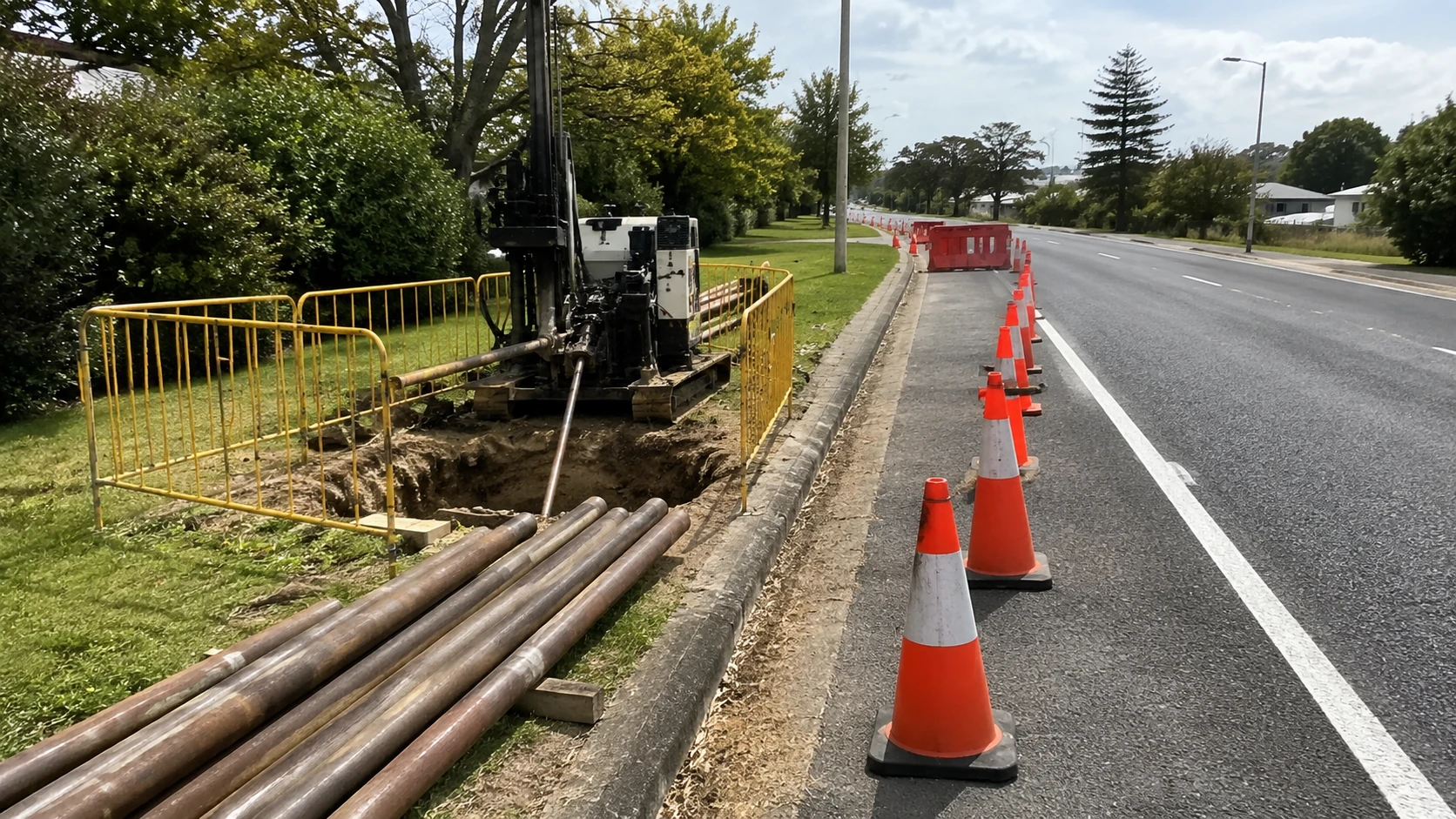
The exact start and end points of a bore are important before preparing a quote. These locations determine the bore length, depth, required equipment and the complexity of steering the drill path around existing infrastructure.
Equally important is the practical working space available at the entry and exit locations. Even a simple bore can become difficult or unworkable if there is not enough room for the drill rig, support trucks, mud systems and safe pipe handling.
Clear, fixed reference points are essential. A contractor will ask for site plans or a sketch showing the proposed entry and exit positions relative to features such as property boundaries, roads, existing utilities and structures.
Useful information includes:
The contractor uses these details to estimate bore length and design a feasible drill path that maintains minimum cover under surfaces while avoiding utilities. If the entry or exit location is too close to obstructions, it may limit the achievable drill angle or make safe pipe handling difficult.
Directional drilling requires more room than many clients expect. The contractor must understand the footprint available for a drill rig setup at the entry side and a pipe laydown and pullback area at the exit side.
If space is tight, such as in laneways or congested verges, professionals may need to specify smaller equipment or additional handling steps, increasing time and cost. In some cases, traffic control or temporary occupation of adjacent land may be required and must be factored into the quote.
Access routes to the entry and exit locations can affect feasibility and pricing. Low trees, weight-limited bridges or pavements, overhead services and narrow driveways may restrict which rigs can be brought to the site. Soft or sloping ground can also require ground protection or additional preparation.
The contractor will also consider:
Providing photos, measurements and any known site restrictions enables a realistic assessment of whether the bore can be drilled as proposed or whether entry and exit points need adjustment before a reliable quote is issued.
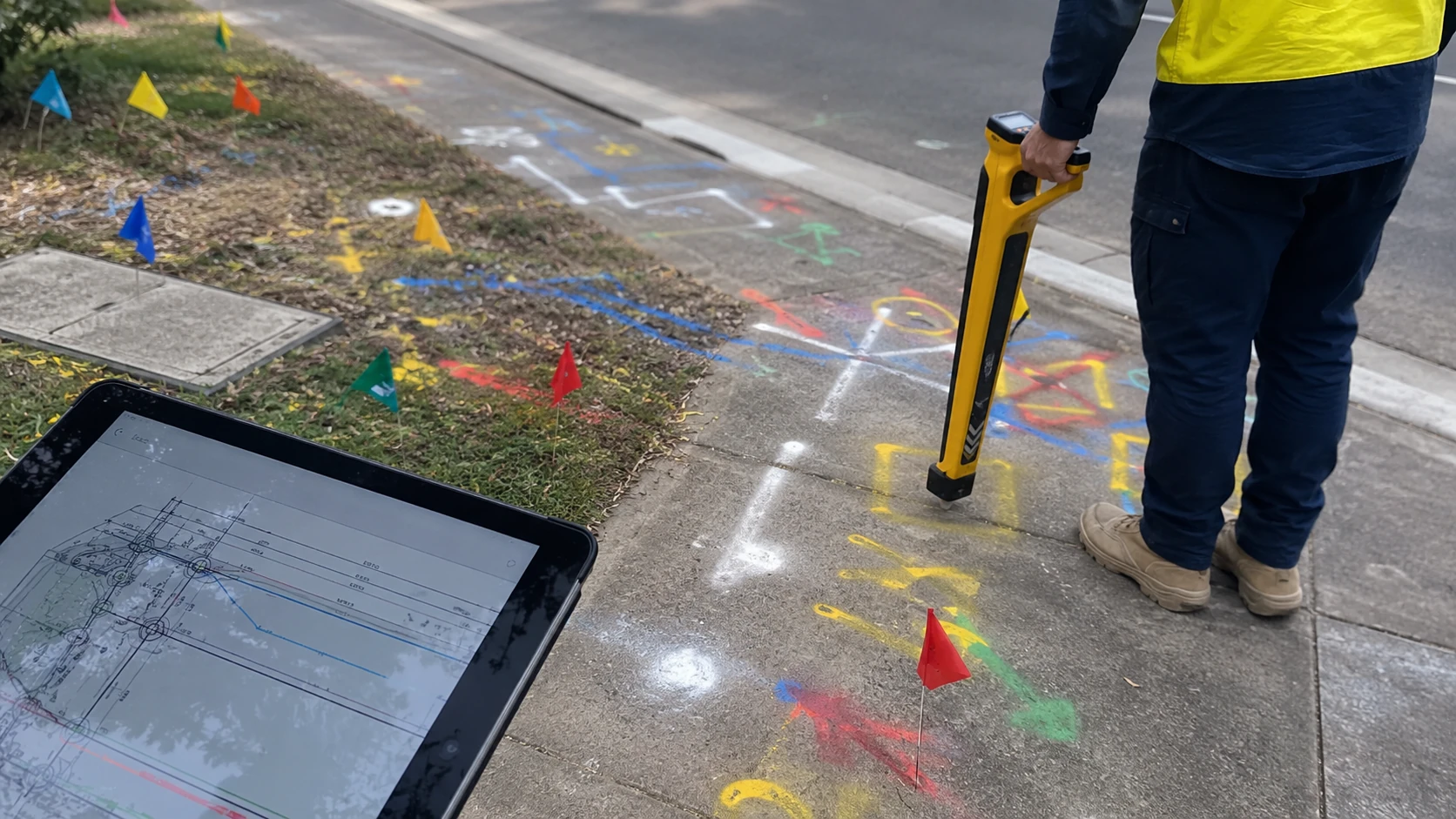
Before any accurate price or programme can be offered, a clear picture of existing underground services and likely ground conditions is essential. This directly affects drilling method, risk profile, tooling selection, drilling fluids, cost and timeframes. Incomplete or uncertain information at this stage almost always leads to contingency pricing or variations later.
Utility plans, location data and geotechnical information allow a contractor to design a safe and practical drill path. They also help identify whether additional investigation is needed before a quote can be treated as reliable rather than indicative.
Details of existing services along the proposed route are one of the most critical inputs. A contractor will typically ask for all available information on:
Current Before You Dig Australia plans for all relevant asset owners covering the proposed corridor are usually requested. These plans are an important starting point, but they should not be treated as confirmation of the exact location or depth of every asset.
Where available, recent utility survey data or ground-penetrating radar outputs are valuable because they can provide more information about actual site conditions than plan-only records. Depths, pipe sizes, materials and any offsets or deviations around structures are particularly useful.
If potholing or vacuum excavation has already exposed services at crossing points, details of those locations, photos and survey shots help tighten risk assessments and reduce allowances for unknowns.
Ground conditions can change a straightforward drill into a complex operation. Any available geotechnical reports, bore logs or soil test results along or near the alignment are highly relevant.
In softer soils or uniform clays, productivity is generally higher and tooling wear is lower, so drilling can often be priced more competitively. In contrast, hard rock, variable layers, running sands or high groundwater can require specialised bits, heavier rigs, different drilling fluids and more time.
If no formal geotechnical data exists, contractors normally rely on local knowledge and mapping. However, they may qualify the quote accordingly or recommend targeted test holes before final pricing.
Information about surface and near-surface constraints linked to underground conditions also affects pricing. Examples include:
These factors can require additional fluid management measures, containment bunding, drilling mud recycling or alternative entry and exit locations. Clear information on underground services and ground conditions at the outset allows a contractor to design a realistic methodology and provide a quote that reflects actual risk rather than broad contingency.
Permit, traffic management and reinstatement obligations can affect the feasibility, cost and timing of a directional drilling project. Before providing a realistic quote, a contractor must understand what regulatory approvals are required, how public or private access will be managed during works and what standard of surface and site restoration is expected at completion.
Clear details avoid unexpected delays and prevent cost blowouts from underestimated traffic control or reinstatement standards. They also allow accurate programming of work so that drilling occurs within approved hours and under the correct conditions.
Any works in or near public roads, footpaths, drainage reserves or utility corridors are likely to require permits from the relevant road authority, local council or asset owner. Early in the quoting process, identify which authority controls the land and what type of approval is needed, such as road opening permits, works within road reserve approvals or utility corridor consents.
In NSW, works within a public road reserve may require approval from the relevant road authority, often through a Section 138 approval, road opening permit or similar council process. If works affect a state road, traffic flow or areas near traffic signals, additional Transport for NSW requirements may also apply.
Some authorities impose strict conditions on work windows, noise, vibration and out-of-hours activity. If special dispensations are required, this must be understood and allowed for in pricing and programme. Where multiple authorities are involved, for example a council and a state road authority, permit timeframes and conditions can compound and must be factored into the quotation.
Directional drilling in or near the road corridor often requires formal traffic management. Before quoting, a contractor must know how the site interacts with vehicles, pedestrians, public transport and property access.
Critical details include:
From this information, it can be determined whether a basic shoulder closure is sufficient or whether lane closures, stop/slow controls or full road closures with detours are required. The complexity of the traffic management plan directly affects the number of traffic controllers, signage, barriers, variable message boards and the duration of controls.
Reinstatement obligations are frequently underestimated yet can represent a critical portion of project cost. A contractor must understand the required finish for every surface disturbed by pits, entry and exit points or temporary access tracks.
Authorities commonly specify that reinstatement must be like-for-like or completed to a particular standard drawing. Some require full-panel or full-lane reinstatement rather than small patching. In private property settings, there may be higher expectations for aesthetic finishes that also need to be allowed for.
A clear definition of these requirements enables a contractor to include realistic quantities, materials and labour within the quote.
A site inspection is often the only reliable way to confirm that the planned work is actually achievable as described in drawings or tender documents. Desktop information, such as Before You Dig Australia plans, design drawings and soil reports, can be incomplete, outdated or not reflective of the real conditions on the ground.
Inspecting the site before finalising a quote allows a contractor to verify risks, access constraints and ground conditions so that pricing is accurate and contingency allowances are realistic. Without this step, a quoted price may not cover the true complexity of the installation.
Directional drilling rigs, support trucks and mud recycling equipment require sufficient space for setup and safe operation. A site inspection confirms:
On tighter urban or industrial sites, the inspection also identifies traffic management requirements, safe pedestrian routes and possible impacts on businesses or residents. These factors affect both cost and programming.
The planned drill path on the drawings may also need adjustment once sight lines are checked on site. Unexpected obstacles, such as retaining walls, culverts, trees or existing services, can require a change in alignment, entry angle or exit location that will influence drilling length and difficulty.
Geotechnical reports and local experience are useful, but they rarely capture every variation along a proposed bore. A site visit allows visual assessment of indicators, such as exposed cut faces, nearby excavations or creek lines, which can suggest transitions between soft soils and rock, highly variable fill material, high groundwater levels or seepage zones.
These factors strongly affect drill time, tooling selection, mud programme and risk of drilling fluid surfacing. Where conditions appear uncertain, the contractor may recommend additional geotechnical testing or trial pits before committing to a fixed price.
Accurate quoting for directional drilling depends on having a complete understanding of the project before work begins. Information relating to underground services, bore design, site access, ground conditions, utility conflicts, permits, traffic management and reinstatement requirements all determine the most suitable construction methodology and realistic project costs.
By providing detailed and reliable project information early, clients enable contractors to assess risks, allocate appropriate resources and develop a drilling strategy that reflects actual site conditions. This helps reduce uncertainty, avoid avoidable variations and support a safer, more efficient installation.


