

A pipe may meet the pressure requirements of its intended service but still be unsuitable for the forces involved in horizontal directional drilling (HDD). During pullback, it experiences tension, bending and contact with the surrounding bore, all of which can affect its integrity before it reaches its final position.
For Sydney projects, confirming pipe suitability before installation helps prevent damage, delays and costly remedial work. Daley Directional Drilling can help project teams assess the installation requirements alongside the proposed crossing conditions. Confirm that the pipe, connections and pulling arrangement can withstand the expected loads, rather than relying on the operating pressure rating alone.
Pipe suitability depends on the proposed assembly and installation conditions, not simply its material or pressure class. The pipe designer and drilling contractor need to assess the relevant limits against the expected demands of the crossing.
An operating pressure rating describes how a pipe performs under specified service conditions. It does not establish how much longitudinal tension or bending the pipe can withstand during installation.
A pipe may meet its pressure requirements while having a pulling limit that makes the proposed crossing unsuitable. The allowable installation load must be determined from technical data and design assessment. Depending on the pipe material, this may involve temperature, load duration, bending strain and the combined effects of tension and curvature.
A quoted tensile strength is not necessarily an allowable installation load. Design factors, material-specific restrictions and the actual installation conditions must also be considered.
Before approving the pipe, ask for confirmation that it has been assessed for the planned pullback. A general statement that a product is suitable for trenchless installation does not replace a project-specific assessment.
Different pipe materials respond differently to tension, bending and surface contact. Wall thickness influences strength and stiffness, but a thicker wall does not automatically resolve every installation constraint. It can also affect the pipe's weight, handling requirements and ability to follow the proposed bore profile.
Connections require separate consideration. A pipe barrel may tolerate a particular load while its joints or fittings have different limits. The assessment should account for joint strength, resistance to separation, bending restrictions and compatibility with the intended installation method.
The complete assembly must be suitable, including transitions, fittings and the pulling attachment. Approval of one pipe product does not automatically cover a different connection or attachment arrangement.
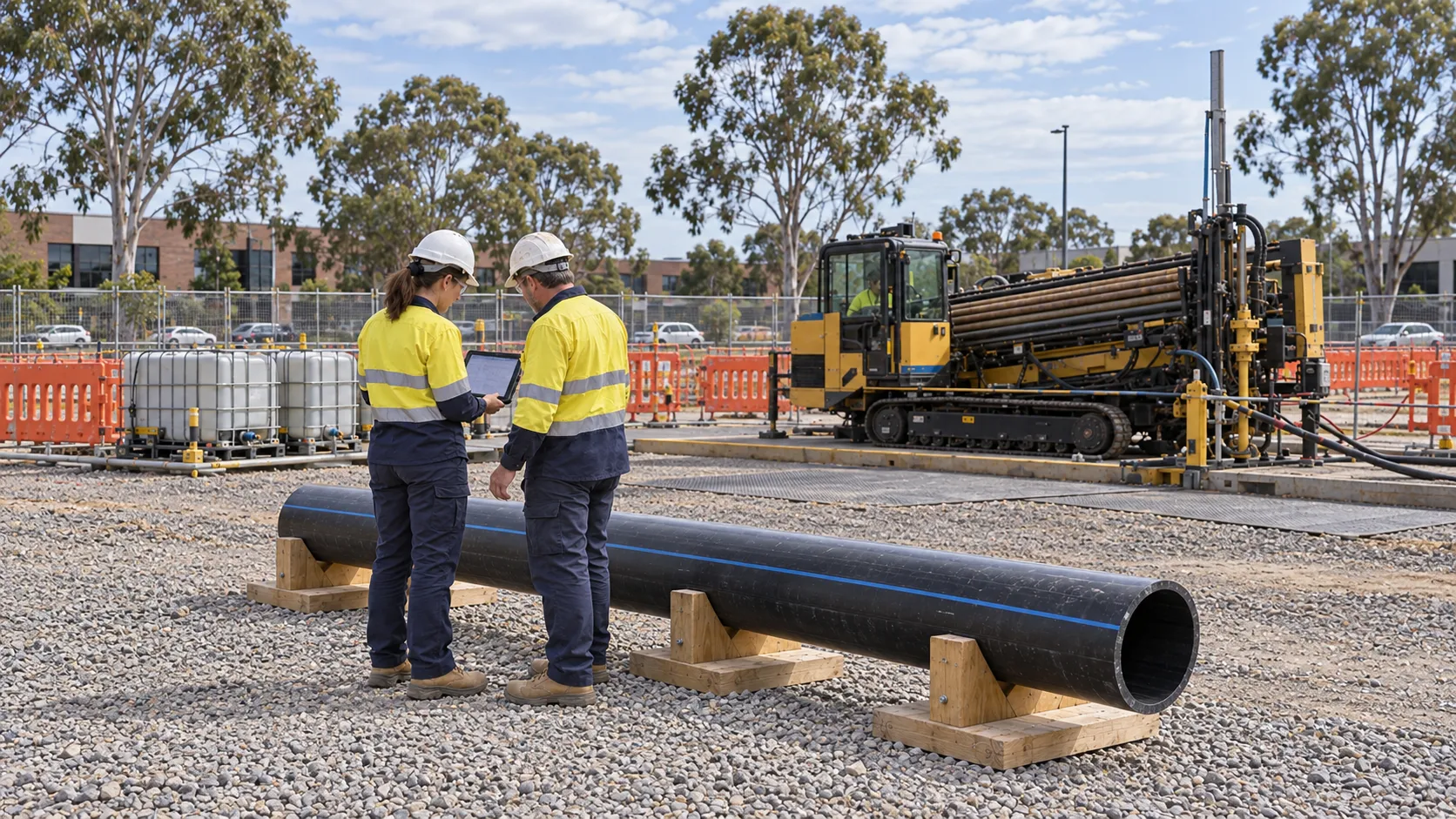
Before committing to the crossing, request documented confirmation of the following:
The contractor needs accurate pipe dimensions, material details, connection specifications and crossing geometry to assess these requirements. The information outlined in what a directional drilling contractor needs before quoting a project can help project teams prepare for that discussion.
If important information remains unavailable, the proposal should identify what still needs to be assessed. Substituting a pipe with apparently equivalent operating specifications also requires review before installation.
Two crossings of similar length can place different demands on a pipe. Length influences the amount of contact within the bore, but curvature, friction, ground conditions and the pipe's approach to the entry point also affect the installation loads.
Tension and bending are separate considerations. A pipe may remain within its allowable pulling load while exceeding its bending limit at a tight curve. Both need to be assessed against the pipe's technical requirements.
As more pipe enters the bore, the length exposed to contact increases. Friction can contribute to the pulling demand, although the relationship is not a simple fixed load per metre. Pipe weight, buoyancy, bore conditions and contact along the installation path can all influence resistance.
Curves introduce additional forces as the pipe changes direction. They can increase contact pressure and friction while also creating bending strain in the pipe wall. The assessment must consider the actual bore profile, including local changes in curvature, rather than treating a crossing as a straight length of pipe.
Where tension and bending act together, their combined effects may need to be assessed even when each appears acceptable on its own. This is one reason a crossing should be evaluated using the proposed installation geometry rather than length alone.
The condition of the prepared bore affects how freely the pipe can move during pullback. Irregular surfaces, local restrictions and unstable sections can increase resistance or create concentrated contact points. Abrasive contact may also damage the pipe surface or protective coating.
These conditions can change the installation demands from those anticipated during planning. The contractor should consider the available ground information, the proposed bore profile and the likelihood of conditions that could increase resistance.
NSW Resources’ DIGS database provides access to existing geological and geotechnical reports that may help inform preliminary investigations. These records provide background information and do not replace assessment of the proposed crossing.
Site-specific information helps determine the assumptions used in the installation assessment. When comparing providers of horizontal directional drilling in Sydney, ask how the expected bore conditions have informed the proposed pipe selection and allowable loads.
The drilling rig's capacity is not the same as the pipe's allowable pulling load. If resistance increases unexpectedly, the response should be guided by the approved installation limits rather than the amount of additional force the equipment can produce.
The pipe begins bending before it enters the ground. Its alignment, surface support and approach to the entry point can create local curvature and loading that must be considered alongside the underground profile.
The proposed entry arrangement should comply with the pipe's applicable bending limits and connection requirements. A satisfactory underground path does not compensate for excessive bending at the entrance.
Changes to the entry angle, surface layout or bore profile may affect the original assessment. The responsible parties should review those changes before proceeding to confirm that the pipe can still be installed within its approved limits.
Protecting pipe integrity requires control over the pulling arrangement, pipe support, surface contact and response to unexpected resistance. These measures should be established in an installation plan based on the pipe manufacturer's requirements and the project-specific assessment.
The designer and contractor should agree on the applicable limits and their respective responsibilities before work begins. This reduces uncertainty when conditions change during installation.
The pulling attachment must transfer force into the pipe without creating unacceptable local stress. Its suitability depends on the pipe material, dimensions, connection arrangement and installation method.
The plan should also address how the pipe will be supported and protected as it enters the bore. Where a coating or outer layer provides corrosion protection or another protective function, its condition must be considered alongside the structural integrity of the pipe.
Project teams should confirm who has approved the pulling arrangement and whether it complies with the pipe's technical requirements. The questions to ask before drilling starts can help clarify these responsibilities before the work begins.
Load monitoring helps identify changes in resistance, but the readings must be interpreted correctly. A drilling rig's displayed force should not automatically be treated as a direct measurement of the tension acting on the pipe. The relationship depends on the equipment, measurement arrangement and installation conditions.
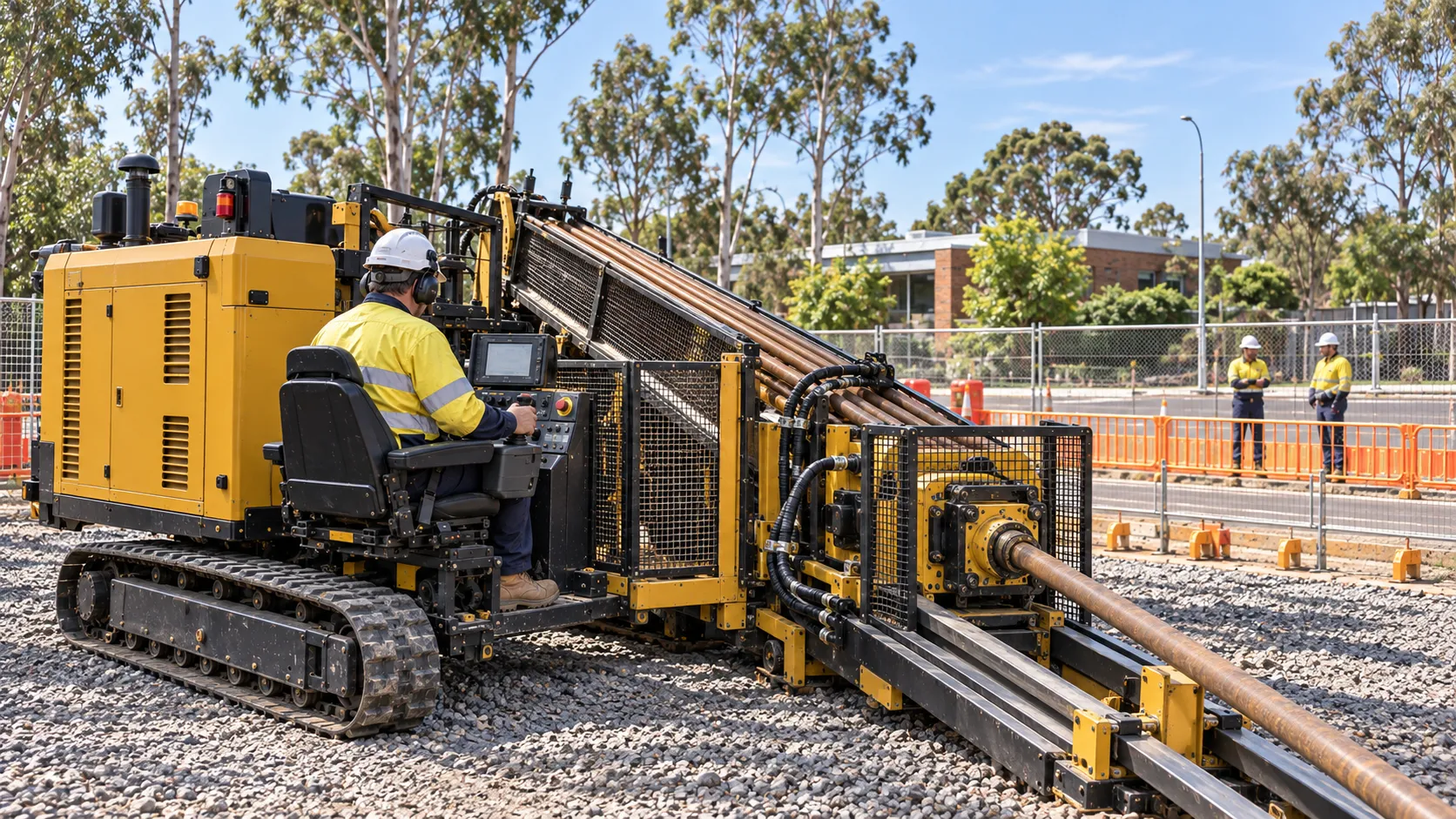
The installation plan should specify which readings or observations will be monitored, the applicable limits and the response to unusual resistance. A sudden increase in load may indicate changing bore conditions or another installation issue that requires investigation.
Before work begins, clarify who can authorise a pause, who will assess the cause of unexpected resistance and who can approve a return to work. Any change to the established limits requires appropriate technical review rather than an assumption that the pipe can tolerate additional force.
Where the work involves high risk construction activities, SafeWork NSW’s guidance on site-specific safe work method statements explains how safety controls should be documented, monitored and reviewed. Recording relevant readings, observations and load events also provides information for subsequent assessment and project documentation.
A pipe that emerges without obvious damage is not automatically proven fit for service. External inspection can identify visible defects, but it may not reveal every form of damage or establish whether the pipe has experienced excessive loading.
If the pipe experiences an unexpected load event, suspected damage or a departure from the approved installation conditions, the responsible parties should assess it before connection or commissioning. The inspection and testing required will depend on the pipe material, intended service, project specification and applicable standards.
Installation records can help establish whether the agreed limits were maintained and identify events that may require further investigation. Final acceptance should follow the project's specified criteria, and passing one test should not be assumed to resolve every concern about the pipe's installation history.
A suitable operating pressure rating is only one part of pipe selection for directional drilling. The proposed pipe assembly must also meet the applicable tension, bending, joint and installation requirements for the specific crossing.
Daley Directional Drilling can be included in the project discussion to help clarify the proposed bore conditions and installation requirements. Before committing to the crossing, have the pipe designer and drilling contractor confirm the approved assembly, allowable loads, monitoring arrangements and process for responding to unexpected conditions.
Resolving these details before pullback begins helps project teams make decisions, reduce avoidable installation risks and protect the pipe's suitability for its intended service.


