

Revisiting an underground cable crossing can be challenging once construction is complete. If a site has planned extensions or is likely to need additional electrical or communications connections, installing spare conduits during the initial works may reduce the need for another crossing later. However, spare capacity is only useful when it supports a realistic future requirement and can be accessed when needed.
Daley Directional Drilling can help builders, electricians and civil contractors assess the proposed conduit arrangement and the crossing's practical requirements. Planning involves identifying likely future connections, comparing conduit options and confirming that the route, endpoints and installation method suit the intended use.
Start by identifying the additional connections the site is reasonably likely to need. A planned second stage of construction, a documented expansion or a known communications requirement provides a clearer basis for reserving capacity than a general possibility of future growth.
An electrical or communications designer should establish the expected requirements before the contractor assesses the proposed crossing. This ensures the initial installation supports a defined purpose without paying for unnecessary capacity.
A documented future building stage is a stronger reason to reserve capacity than an undefined possibility of expansion. If another building will eventually need a connection across the same obstacle, planning for it during the initial works may avoid a separate drilling project.
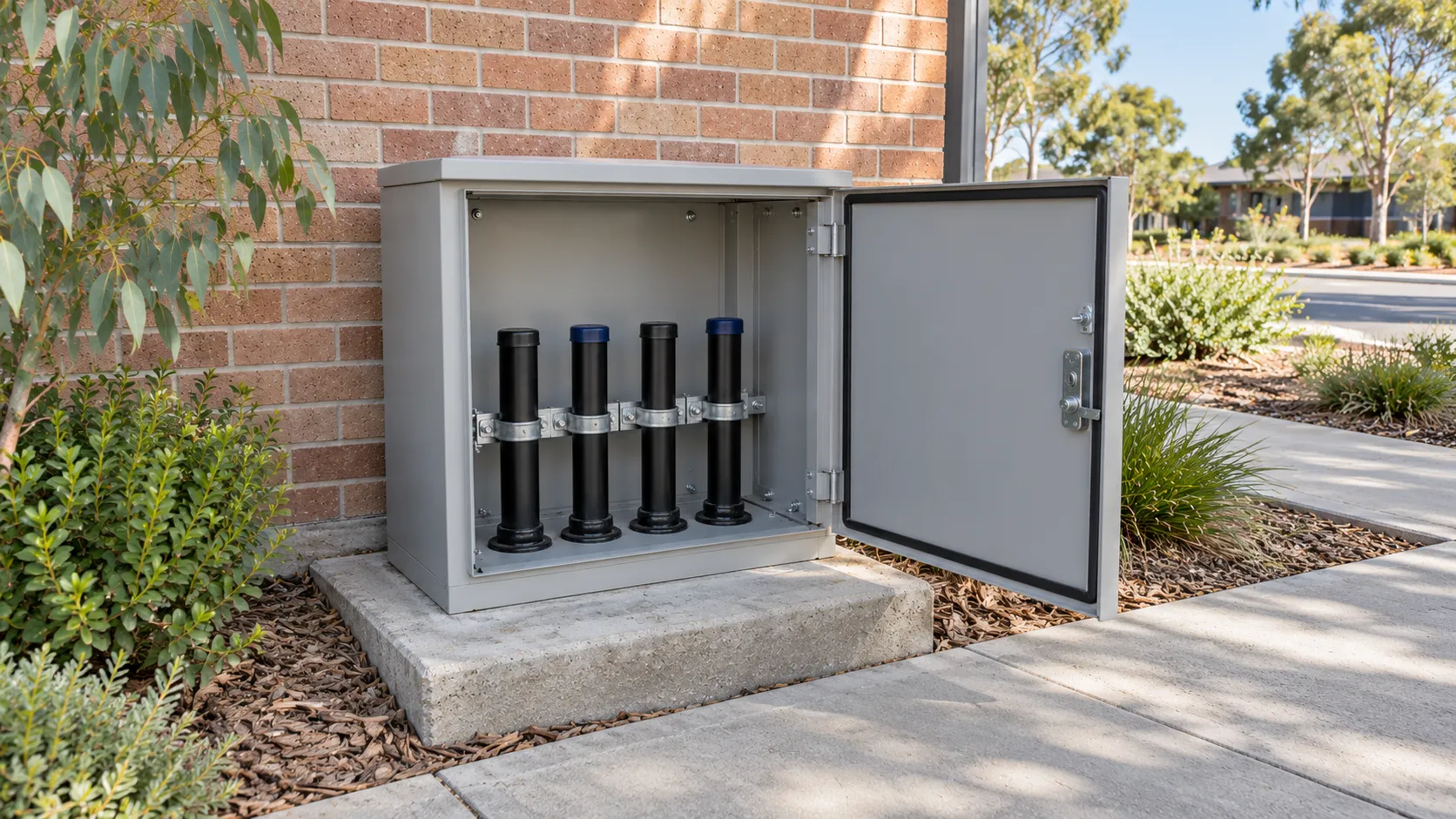
A future communications connection may also justify a spare conduit, particularly when the destination and intended route are already known. However, the possibility of upgrading connectivity does not automatically mean an additional conduit is required. The designer should establish what service is anticipated and if it can use the proposed crossing.
Before requesting quotes, identify the expected number of future connections, their intended purpose and any known installation requirements. Ask the designer to explain the assumptions behind the proposed allowance, when the future demand remains uncertain.
This approach helps distinguish useful planning from speculative expansion. The goal is not to predict every possible change to the site but to reserve capacity for credible needs that can be accommodated within the initial design.
A spare conduit is useful only when it connects the locations that a future service needs to reach. An empty pathway beneath a road, driveway or other obstacle may not solve the problem if the eventual connection requires a different route.
Consider a staged development where the initial crossing reaches the first building, but a later stage will be constructed elsewhere on the property. The spare conduit may cover the crossing itself while still requiring additional trenching or other works to reach the new building.
The proposed entry and exit points should be considered alongside the future site layout. Where the intended route is not yet confirmed, the designer should identify which parts of the connection remain unresolved.
When planning the route, request underground utility plans through Before You Dig Australia to help identify existing services. These plans indicate the presence of underground assets rather than their exact location, so further locating work may be needed.
For background on the installation process, learn how directional drilling is used to install underground utilities. This can frame discussions around the actual route and connection requirements rather than the number of spare conduits alone.
When requesting quotes, provide each supplier with the proposed connection points, anticipated construction stages and the designer's conduit specifications. Ask suppliers to identify any additional work that would still be required before a future connection could be completed. This makes it easier to compare proposals on their practical value, rather than assuming an unused conduit will automatically make the later upgrade straightforward.
A larger conduit and a separate spare conduit provide different types of capacity. A larger conduit may offer additional room within an occupied pathway, while a separate conduit provides an independent route for a future cable. The appropriate option depends on the intended services, installation requirements and future access needs.
The electrical or communications designer should specify the arrangement before the drilling contractor finalises the proposed installation. Conduit diameter alone does not establish whether a future cable can be installed safely or practically.
An occupied conduit may appear to have room available, but visible space does not necessarily represent usable capacity. The existing cables, proposed additions, cable characteristics and installation method can all affect whether another cable can be accommodated.
Electrical installations may also require consideration of cable grouping, heat dissipation and other design requirements. These factors need to be assessed by a professional rather than inferred from a conduit measurement or a drilling quote.
Future cable installation can become more difficult when existing cables are already in place. Depending on the arrangement, pulling another cable through an occupied conduit may be impractical or may require changes to the installation. A larger conduit should not be treated as a guarantee that future upgrades will be simple.
Ask the designer to confirm what future use the additional capacity is intended to support and what conditions would apply. If the anticipated cable has not yet been selected, the design should identify the assumptions and limitations that need to be reviewed before installation.
The initial project should also account for applicable electrical and communications requirements. Reserved space does not remove the need for professional assessment when the future cable is installed, particularly if the site conditions or service requirements have changed.
A separate spare conduit provides an unoccupied pathway that can be reserved for a future connection. This may be more practical when the anticipated addition needs an independent route or when the existing conduit is not suitable for another cable.
However, a spare conduit still needs appropriate sizing, suitable endpoints and protection. Its intended use should be documented so future contractors can identify the pathway and determine whether it remains suitable for the proposed service.
Electrical and communications services cannot automatically be placed in the same conduit. Compatibility, separation requirements and the applicable installation rules must be considered by the designers. An oversized conduit should not be assumed to replace separate pathways where the design requires them.
The proposed conduit arrangement also affects the drilling work. The number of conduits, their external dimensions and their configuration need to be considered together when assessing the bore and installation method. Adding a spare conduit can change the scope of the crossing, even when that conduit will initially remain empty.
When comparing directional drilling in Sydney, provide the same specified arrangement to each supplier. This allows the contractor to assess the actual installation requirements rather than making assumptions about an undefined future allowance.
The common questions about directional drilling provide further background on the process. The key decision is whether the project needs additional room within an occupied conduit, an independent spare pathway or a combination specified by the designer.
Once the future requirements are defined, the proposed conduit arrangement needs to be assessed against the actual crossing. The number and size of conduits can affect the installation, while the route and endpoints determine whether the reserved capacity will remain useful when the next stage of work begins.
Capacity planning should consider the conduit arrangement, the feasibility of installing it and the accessibility of future connections. Addressing these factors together helps avoid paying for spare pathways that are difficult to use or do not meet the site's eventual needs.
Adding conduits changes the overall dimensions and configuration of the installation. The drilling contractor needs to assess the complete arrangement against the proposed route, ground conditions and installation requirements.
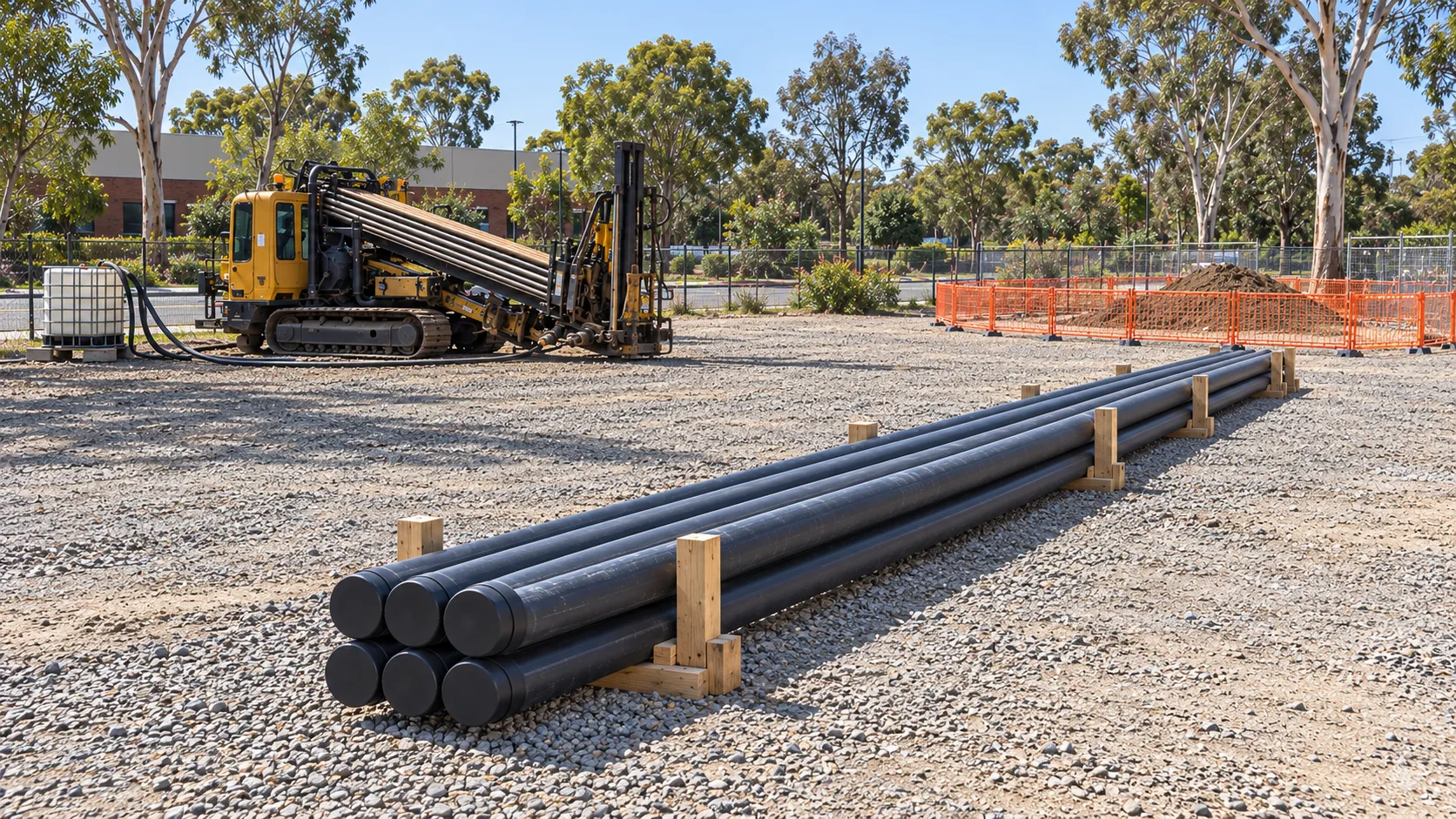
A crossing that is suitable for a single conduit may not automatically accommodate a larger bundle. The contractor must assess the proposed dimensions and determine what installation method and scope are appropriate for the site.
At the same time, reserving future capacity does not necessarily mean choosing the largest possible bore. A more extensive installation may add unnecessary cost or complexity if the anticipated future requirement can be met with a smaller, appropriately designed arrangement.
This is why conduit requirements should be settled as early as practicable. Adding conduits after the initial assessment may require the contractor to review the proposed installation and revise the scope or quote. Before accepting a proposal, confirm that the assessment covers the complete specified arrangement, including any spare conduits.
Site conditions also matter. The route, access constraints and ground conditions can influence what is practical for a specific crossing. The discussion of challenges in Sydney drilling projects provides further context for why each installation needs a site-specific assessment.
Before excavation begins, obtain information about underground essential services at the site and in adjacent areas, and provide it to the excavation contractor.
Both ends of a spare conduit must remain accessible and useful to the future project. An empty pathway beneath a road or other obstacle offers limited benefit if later construction cannot reach its endpoints without substantial additional work.
The designer should check the proposed entry and exit locations against the anticipated future site layout. Changes to building positions, service locations or access arrangements may mean that additional trenching or another crossing is still required, even when a spare conduit has been installed.
Unused conduits also need appropriate protection against water, debris and other potential obstructions. The required sealing and protection arrangements should be specified for the intended application. The project team should clarify who is responsible for maintaining that protection and how the pathway will be identified after construction.
Accurate as-built records are equally important. These should identify the crossing’s location, distinguish occupied conduits from spare ones and record the relevant endpoints. Clear documentation helps future contractors locate the correct pathway and assess whether it suits the intended cable.
Before a future cable is installed, professionals should confirm the condition and suitability of the spare conduit rather than relying solely on the original design. A pathway that was suitable when installed may need to be checked against the later project’s requirements.
Before committing to the crossing, confirm the intended conduit arrangement, route and endpoints with the designer and Daley Directional Drilling. Ensure the agreed installation scope, protection provisions and record-keeping responsibilities are documented and clarify any assumptions that remain unresolved.
The most useful spare capacity is capacity that serves a defined future need. By planning the likely connections early, selecting an appropriate conduit arrangement and checking that the complete crossing can accommodate it, builders and contractors can make more informed decisions about the initial installation and future upgrade costs.


