

When planning a directional drilling project, it is easy to focus on alignment, depth and deadlines while assuming ground conditions will remain relatively manageable. In practice, rock formations can change the entire nature of a bore. What may appear straightforward on paper can quickly become a far more complex operation once drilling begins, especially on projects involving directional drilling in Sydney where subsurface conditions can vary significantly from one site to another. From soft fractured formations to dense, abrasive rock, geology has a direct influence on cost, programme, tool wear and long-term asset performance.
Daley Directional Drilling explains how different rock types and ground structures affect steering accuracy, drilling speed and equipment performance. It also outlines why hard or variable formations require the right bit selection, mud programmes and downhole tooling, and how unexpected transitions can increase torque, vibration and the risk of tool failure. With the right planning, site investigation and on-site decision-making, these challenges can be better managed so drilling operations remain safer, more predictable and more cost-effective in demanding conditions.
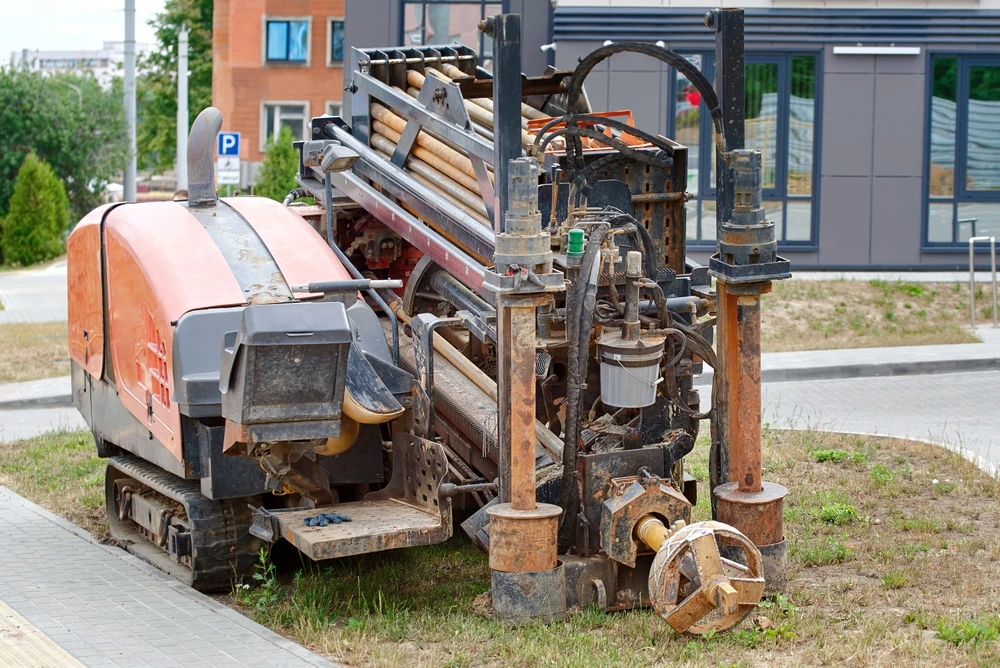
Rock conditions reshape project planning long before a rig arrives on site. Bore design, tooling selection, drilling fluid strategy and programme allowances all need to be adjusted to suit the type, strength and variability of the rock below ground. When those factors are underestimated, the result can be slow progress, excessive wear, lost tooling and, in some cases, a failed bore.
Effective planning begins with recognising that rock is never uniform in the way it behaves during drilling. Soft, fractured shale presents very different challenges from dense granite, abrasive sandstone or layered limestone. Each formation influences the drilling approach differently, so rock conditions need to be factored into design, budgeting and risk management from the beginning rather than treated as an afterthought.
Strong project planning starts with gathering as much information as possible about subsurface conditions. Geotechnical reports, well logs, previous HDD records and local utility data all help build a clearer picture of what the drill path may encounter. This information can reveal rock type, strength, abrasiveness, layering, joints, faulting and changes in formation along the proposed alignment.
That knowledge allows the bore path to be designed more intelligently. In some cases, it may be possible to avoid the most difficult ground altogether. In others, the goal is to stay within more consistent strata rather than repeatedly crossing between hard and soft layers. Even where the route cannot be changed significantly, understanding the geology early helps set more realistic expectations for drilling speed, tooling wear and contingency needs.
Rock conditions play a major role in determining what tooling will be needed on site. Hard, competent rock may call for mud motors, high-torque bit assemblies, specialised cutters and staged reaming tools. Softer or more fractured rock can require a different balance of aggression, stability and steering control in the drilling assembly.
This is also where contingency planning becomes essential. If rock quality is uncertain, project schedules and budgets need to account for slower penetration rates, higher tooling consumption and the possibility of additional equipment being required. On rock jobs, contingency time and allowance for backup tooling are not optional extras. They are often necessary to keep the project moving when conditions differ from what was expected.
Rock conditions also change the drilling fluid strategy. Competent rock may demand higher pump pressures to maintain hole cleaning, while fractured or cavernous ground can lead to fluid losses if the formation cannot hold returns. Reactive formations may introduce their own risks, including swelling, instability or poor cuttings transport if the wrong mud system is used.
Planning for rock drilling usually includes:
Risk assessments should also consider the likelihood of deviation, stuck pipe, poor bore stability or fluid loss across different sections of the alignment. These risks influence decisions about pilot bore strategy, staged reaming, intersect drilling or whether alternative construction methods should remain available if conditions become unworkable.
Rock type affects how easily the bit can cut, how stable the bore remains and how accurately the planned alignment can be maintained. A drilling setup that performs well in soft shale may struggle badly in abrasive sandstone or fractured limestone. This is why understanding the rock profile matters so much before drilling starts.
It is also important to remember that directional drilling in rock is not simply a matter of hardness. Abrasiveness, fracture patterns, bedding planes, voids and changing ground conditions all affect how the tooling behaves. Different rock types present different challenges, and each one may require adjustments in technique, tooling or drilling parameters.
Hard igneous rock such as granite or basalt is highly resistant to cutting. Bits must work harder to break the formation, which increases torque, heat and vibration. This usually leads to slower penetration rates and a greater risk of bit damage, bearing wear or premature tool failure.
Bit selection becomes critical in these conditions. Polycrystalline diamond compact (PDC) bits or roller cone bits with cutter configurations suited to high compressive strength are commonly used. Drilling parameters also need to be tightly managed. Excessive weight on bit or poor RPM control can damage cutters, stall the motor or increase vibration to the point where steering becomes more difficult and downhole tools are placed at risk.
Abrasive formations create a different problem. They may not always be the hardest rock on site, but they can wear out bits, stabilisers and tool joints very quickly. Tool life often drops much faster than expected if wear is not monitored carefully, which increases trips out of the hole and adds non-productive time.
Steering can also become less reliable as wear progresses. When bits and stabilisers lose their intended profile, the assembly may start to walk, spiral or gradually drift away from line and grade. Monitoring rotation torque, pullback force and fluid behaviour helps identify when wear is beginning to compromise drilling performance or directional control.
Fractured or layered formations often create more unpredictable drilling conditions than uniform hard rock. Shale, limestone and jointed rock can include soft and hard bands, weak seams, voids or natural planes of weakness that influence how the bit tracks underground. Rather than cutting straight through the formation, the bit may be pulled off course by these weaker zones.
Fluid loss is also more common in fractured or cavernous ground. When returns disappear into cracks or voids, hole cleaning suffers and cuttings may begin to accumulate in the bore. This increases the risk of stuck pipe, local instability or difficulty during reaming and pullback. In bedded shales or layered limestone, the drill string may also favour softer layers, causing unwanted deviation or a bore that gradually falls away from the planned path.
Mixed ground can be especially difficult. Where rock alternates with gravel, weathered material or softer soils over short distances, the ideal drilling setup for one section may be unsuitable for the next. This often forces a more conservative approach to steering, bit selection and fluid design so the most difficult intervals can be handled without losing control in the easier ones.
Rock conditions determine what equipment is suitable, how quickly tooling wears and how efficiently the bore can progress. When the wrong tooling or mud programme is used in the wrong formation, problems can escalate quickly. Damage to bits, loss of steering control, unplanned downtime and cost overruns are all common results of poor rock planning.
Understanding how different formations affect bits, motors, rods and fluids allows for more realistic production expectations and better protection of critical drilling components.
Hard, competent rock such as basalt or quartzite typically requires aggressive cutting structures with strong wear resistance. PDC bits, tricone bits and hardened rock reamers are often needed to break the formation effectively rather than scrape at it inefficiently. In these conditions, higher torque demands and slower penetration rates should be expected.
Softer rock such as shale or weathered limestone may allow faster penetration, but it can still create serious drilling issues. Some shales react poorly to incompatible drilling fluids, swelling or sloughing into the bore and increasing the risk of trapped tooling or bore collapse. Even where the rock appears easier to cut, bit design still needs to balance drilling speed with bore stability and steering response.
Rock strength and structure have a direct effect on steering performance. In hard or interbedded formations, steerable motors and related systems must deliver enough torque and thrust to alter the path without stalling or damaging components. In fractured or bedded rock, the bit may deflect at interfaces between layers and begin tracking away from the intended alignment.
Higher torque in rock also increases stress on rods, connections and swivels. If the drill string is not suited to the expected loads, there is a greater risk of fatigue, thread damage or failure downhole. Torque monitoring, correct make-up procedures and proper thread compound all play an important role in protecting the drill string. Rock containing hard stringers or nodules can also create sudden impact loading, which increases the risk of bent subs, damaged bearings or erratic tool response.
In rock drilling, drilling fluid does much more than carry cuttings out of the hole. It also cools the bit and motor, suspends dense rock fragments and helps stabilise the bore. Hard rock tends to generate coarse, heavy cuttings that settle quickly if annular velocity is too low. When hole cleaning becomes ineffective, drag rises, torque increases and tooling can become trapped during reaming or product pullback.
Different rock types also react differently to fluid systems. Reactive shales may require inhibitive muds to reduce swelling, while heavily fractured or cavernous limestone can lead to severe losses and poor transport of cuttings. Matching the fluid programme to anticipated conditions is essential, and contingency plans should always be in place for loss zones, unstable layers or formations that do not behave as expected.
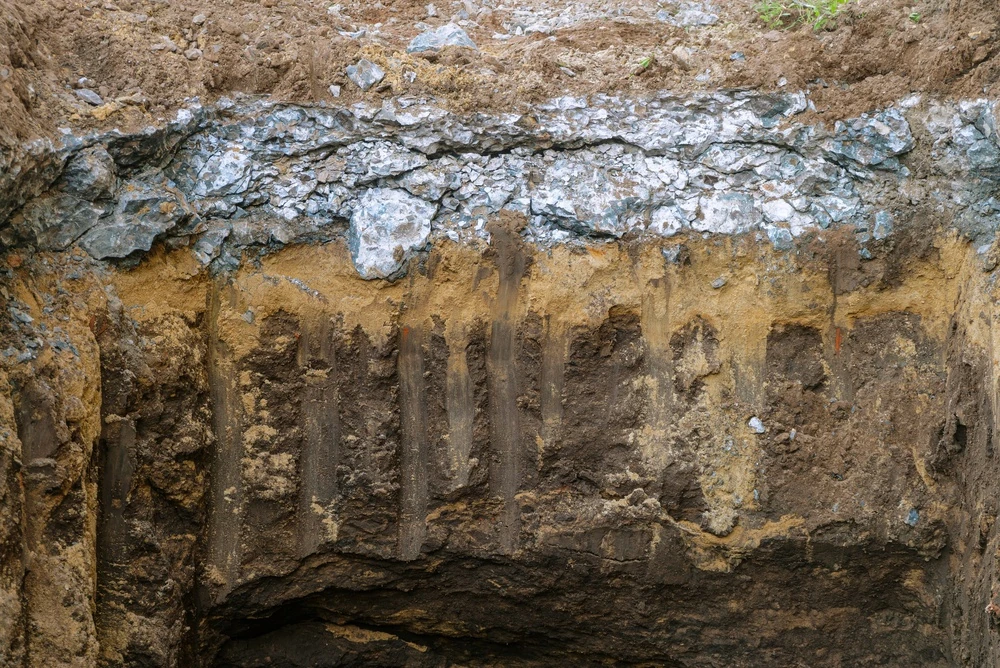
Once solid rock is encountered, the margin for error becomes smaller. Steering corrections take longer, tools respond less predictably and maintaining line and grade becomes more demanding, especially in areas where the alignment passes near utilities, road crossings, rail infrastructure or other sensitive assets.
This becomes even more difficult when rock conditions vary along the bore. A route that begins in soft overburden may transition suddenly into shale, sandstone or mixed fractured rock. Each change can alter steering response, fluid behaviour, torque and cuttings transport, turning a manageable pilot bore into a much more technically demanding operation.
Directional steering depends on the bit responding consistently to adjustments in tool face and drilling force. In dense rock, the bit often follows the path of least resistance rather than the exact planned curve. This makes tight tolerances harder to achieve, particularly under existing infrastructure where even small deviations can become critical.
Tool wear makes the problem worse. As steering tools and bits lose efficiency, they may stop building angle properly or begin drifting off line. This is why rock jobs often require more frequent tracking, depth verification and, in some cases, design adjustments to suit the actual steering response being seen in the field.
Holding the bore stable becomes more complicated when rock quality changes along the alignment. Massive intact rock can support the bore well, but fractured, weathered or layered ground can lead to instability, local collapse or irregular hole shape, especially around curves or transition zones.
Common bore control issues in rock include:
Higher torsional stress also becomes a concern. When resistance builds and then suddenly releases, the drill string can unwind or jump, creating deviations and placing extra stress on the drilling assembly.
Rock conditions can turn an otherwise straightforward directional drilling job into a high-wear, high-risk operation. Hard, abrasive and fractured formations place more strain on tooling, reduce drilling speed and increase the chance of downtime. These effects need to be reflected in pricing and programme planning from the outset.
In real project terms, rock can affect nearly every major cost driver. It can increase fuel use, mud consumption, labour hours, tooling replacement, reaming requirements and the likelihood of recovery work or contingency measures. All of that adds pressure to both programme dates and job margins.
Hard and abrasive rock rapidly wears steel components downhole. PDC bits and tricone bits lose cutters or teeth more quickly, reducing drilling efficiency and forcing changeouts sooner than planned. As the bit dulls, penetration slows further, which extends time on site and increases operating cost.
Mud motors and steering tools also suffer in rock because of the added torque, vibration and heat. Bearings, seals and elastomer components can fail early when surface parameters are pushed too hard in an effort to maintain progress. Rods and connections are also exposed to greater torsional stress, increasing the likelihood of thread galling, fatigue or joint failure. If a connection fails in the hole, recovery can become difficult and expensive.
Rock nearly always reduces the rate of penetration compared with soil or easier mixed ground. Steering corrections take more time, and additional reaming stages may be required to achieve the final bore diameter and support a smooth pullback. Where the alignment moves through formations of different strength, the crew may need to keep adjusting weight on bit, rotation and fluid parameters, which slows production further.
Unexpected transitions into harder rock can stop progress altogether while tooling is changed or the drilling strategy is reassessed. On projects tied to road closures, rail possessions or shutdown windows, that lost time can have major knock-on effects for the wider programme.
Every extra hour spent drilling in rock increases direct cost. Fuel consumption rises, drilling fluid demand grows and labour time extends. Tooling wear becomes a major budget item when bits, reamers, motors and related components need replacing more often than expected.
If the investigation stage underestimates rock conditions, specialist tooling may need to be mobilised at short notice, often at additional cost. The combined effect is tighter margins, greater commercial pressure and a more difficult balance between keeping the job moving and maintaining safe drilling parameters.
Experience is one of the most important factors in managing cost, risk and programme on rock drilling jobs. Rock formations rarely behave exactly as they appear in a report. Crews with experience in similar ground can identify early warning signs, adjust drilling parameters more effectively and respond before minor issues become expensive delays.
Many HDD jobs through rock may appear straightforward in design drawings, but subtle changes in hardness, fracturing or abrasiveness can alter the way tools perform over very short distances. Knowing how to read those changes and respond appropriately is what often separates a controlled bore from a problem job.
Geotechnical information provides a starting point, but once drilling begins, the crew is constantly gathering new information through the behaviour of the tooling and the bore itself. Changes in torque, penetration rate, fluid returns or pullback pressure all help reveal what the formation is actually doing.
Experienced drillers understand how to interpret these signs. They know when a steering response suggests a harder band ahead, when fluid losses point to fractures or voids, and when changes in vibration or torque indicate rising risk to the tooling. That ability to read the ground in real time helps maintain line and grade and reduces the likelihood of damage to the bore path or surrounding infrastructure.
Success in rock drilling depends not only on selecting the right tools but also on using them correctly. Misjudging the formation or pushing the tooling too aggressively can lead to early bit failure, motor damage or lost assemblies downhole.
Experienced crews are generally more disciplined with weight on bit, rotation, circulation and other drilling parameters. Rather than forcing production at the expense of tool life, they manage the bore in a way that supports both progress and equipment protection. That reduces unplanned trips, improves consistency and often lowers total project cost even if the pace appears more conservative at first.
Rock conditions do not simply add difficulty to a directional drilling project. They shape the entire technical and strategic approach required for success. From toolface control and steering response to wear rates, torque, bore stability and drilling fluid performance, geology has a direct influence on how the job must be executed.
Hard, fractured and interbedded formations demand reliable geotechnical information, carefully chosen tooling, suitable fluid programmes and continuous monitoring throughout the bore. As expectations for precision, efficiency and minimal surface disruption continue to increase, the ability to understand and manage rock conditions remains one of the key factors in delivering successful directional drilling outcomes.


